Record keeping · 4 min read
How to Build a Vehicle Maintenance Log That Stays Useful
A maintenance log should answer three questions without detective work: what happened, what proved it, and what needs attention next.
These guides show what to save after a job, which reading goes with it, and how to find the proof later.
Record keeping · 4 min read
A maintenance log should answer three questions without detective work: what happened, what proved it, and what needs attention next.
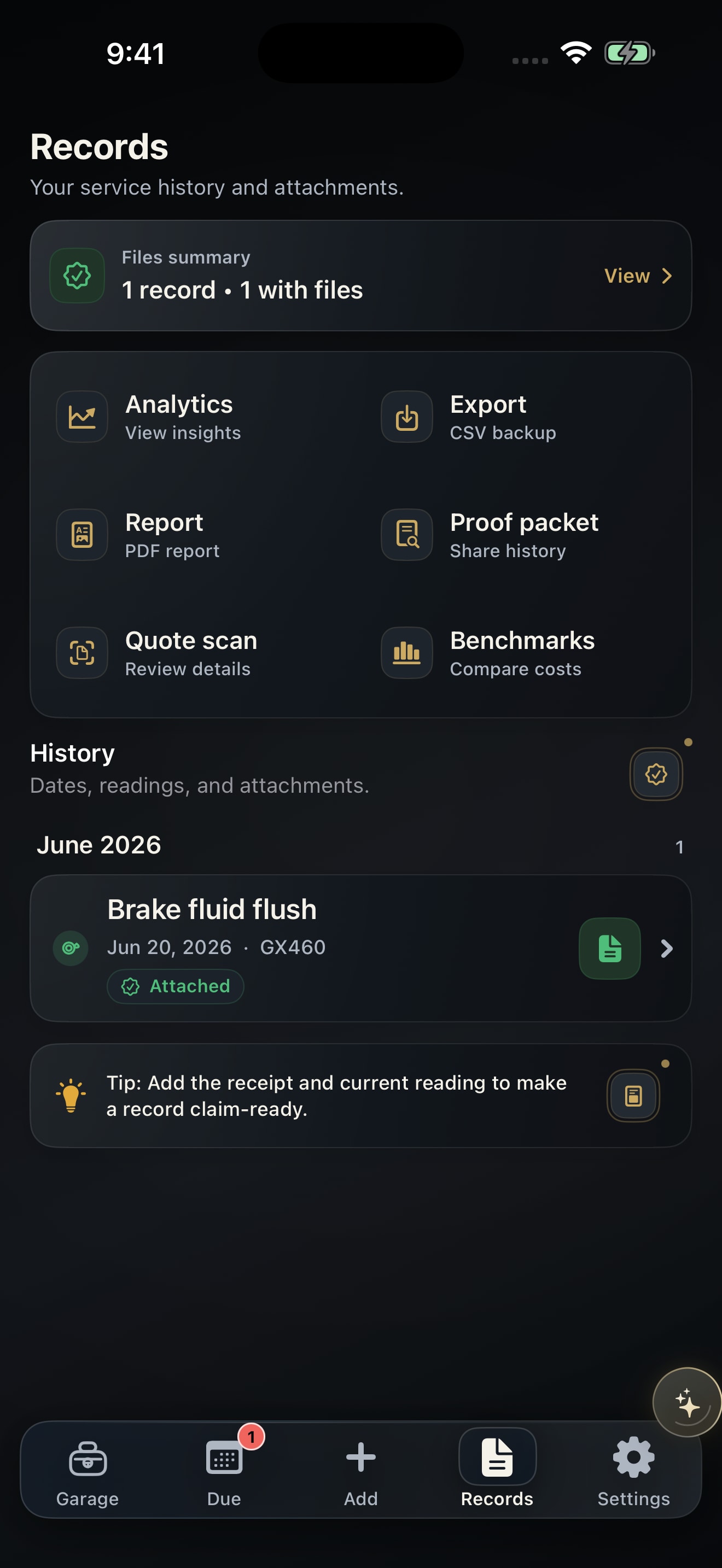
I start with one maintenance job, then check the details against the manual, regulator, or standard for that machine. If a guide mentions something ServiceVault can do, I open the current build and verify it there.
Every guide shows when I last reviewed its sources. If something is wrong or unclear, email me and I’ll correct it.
Start with scattered records, or jump to the kind of machine you maintain.
Start here when reminders are uncertain, a machine is changing hands, or its history is split across receipts, notes, and apps.
6 min read
A receipt shows what you bought. A completion note records what you actually did. Save both with the reading, source, and a few labeled photos.
4 min read
The estimate, final invoice, and card charge can show different numbers. Keep the source trail, then record one supported cost for the completed job.
7 min read
The same job can show up in a dealer portal, a repair order, and your own notes. Keep every source, but let the timeline count the completed work once.
6 min read
One shop visit can leave you with five kinds of paperwork. Save each one for what it proves, then turn the completed work into one clean service record.
6 min read
A used car, motorcycle, generator, or boat rarely arrives with a complete story. Keep the gaps visible, record what you can prove, and give future work a clean starting point.
5 min read
The work that closes one season should leave a clear starting point for the next. Keep the exact manual, reading, completed steps, proof, and open questions with each machine.
3 min read
Save the record you will need next: the completed job, the document behind it, and the reminder that follows. Everything else can stay out of the way.
3 min read
The best reminder follows how the machine is actually used and keeps the applicable manual or schedule close by.
4 min read
A clean handoff shows what happened, when, and which document supports each entry. It cannot certify condition, safety, or resale value.
5 min read
A repair visit is easier to explain when your useful records are already in one short handoff. The goal is not to give the shop your whole archive. It is to show what happened, what you noticed, and what may matter now.
5 min read
An hour reading is only useful when it stays tied to the machine, the work, and the proof. A bare number in a notebook will not tell you which asset was serviced or what changed.
6 min read
You took a photo of the part label. Now you're scrolling past a camping trip, three receipts, and a dozen pictures of the same engine bay. You remember saving it. You can't remember which job it belonged to.
6 min read
The tractor has one history. The mower behind it has another. That sounds obvious until an invoice, a meter photo, and a parts receipt all end up in a folder called tractor stuff.
6 min read
You wrote “follow the manual” beside a maintenance entry. Six months later, there are three PDFs in the folder and none is clearly the one you used. The note is still there. Its source has gone missing.
A generator, motorcycle, RV, boat, or other machine leaves a different record trail.
5 min read
Keep runtime and service as separate records, linked by the hour reading captured when the work was done.
5 min read
An RV can be a small fleet traveling together. Give the coach, chassis, generator, trailer, and tow vehicle separate records when they are part of your rig.
4 min read
An EV may need less routine maintenance than a gas car. You still need the invoice, mileage, warranty documents, recall work, and notes for that vehicle.
4 min read
A trailered boat carries four maintenance histories: hull, engine, trailer, and tow vehicle. Keep them connected without blending their readings or service records.
5 min read
A collector car can outlive owners, shops, file cabinets, and online accounts. The record should preserve what is known without turning every old document into proof of a claim.
7 min read
A build log should show what changed, when, what it cost, and which receipt or photo supports it.
5 min read
Your car has barely moved since its last oil change, but the calendar keeps moving. Should you book service because months have passed, or wait until the odometer catches up?
ServiceVault keeps the reading, completed work, receipt or photo, and next reminder on the same vehicle or machine record.